Why Some People Taste Colors
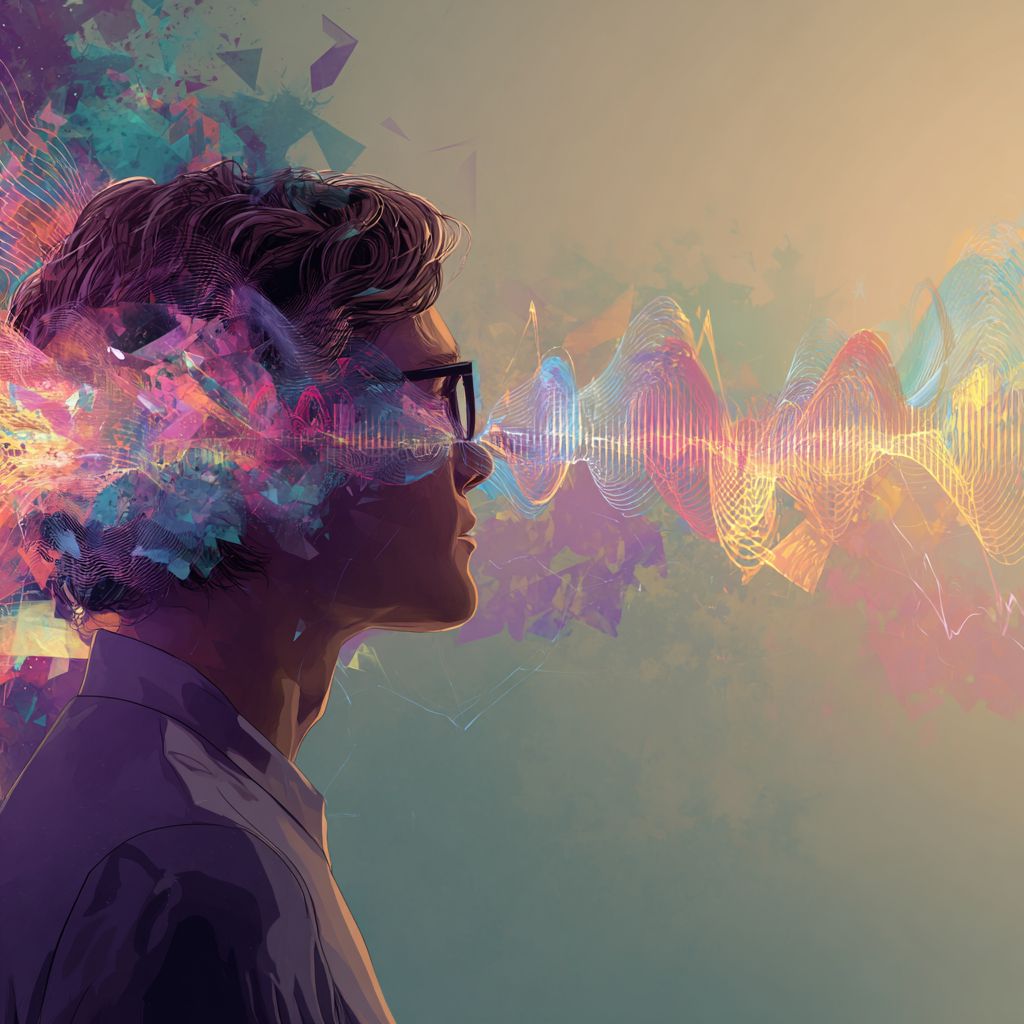
Synesthesia is a rare condition in which senses blend together — letters might have colors, sounds might have textures, and numbers might taste like sweets. Scientists believe the brain may be cross-wiring perception.
Why Some People Taste Colors
For most people, senses are separate. Seeing is not the same as hearing, hearing is not the same as tasting, and tasting is not the same as touch. But for a small portion of the population, these boundaries blur. Colors may have flavors, sounds may have shapes, and letters may carry personalities. This phenomenon is known as synesthesia, and it challenges our assumptions about how the brain organizes perception.
When Senses Overlap
Synesthesia creates unusual combinations of sensory experience. Someone with grapheme-color synesthesia might see numbers in specific colors—“3” might always be yellow and “7” always green. Another person might experience sound-to-color synesthesia, perceiving musical notes as bursts of color or motion. In rare cases, individuals taste words or flavors in response to sounds or colors.
These experiences are not metaphors or artistic exaggerations. For synesthetes, they are consistent, involuntary, and stable over time.
The Brain’s Sensory Map
To understand synesthesia, scientists look at how the brain processes sensory information. The brain is organized into networks that handle different modalities: vision, hearing, taste, touch. But these networks are not fully isolated. Connections between them allow us to integrate information—for example, recognizing that a barking sound comes from a dog we see.
Synesthesia may arise when these connections are stronger or more direct than usual. Instead of combining information for the sake of understanding, the brain blends sensory pathways, producing unique cross-modal experiences.
Synesthesia and the Developing Brain
One hypothesis suggests that all infants may begin life with a more interconnected sensory cortex. As the brain matures, unnecessary connections are pruned to make perception more efficient. If pruning is less aggressive in some individuals, synesthesia may persist into adulthood.
This idea fits with reports that synesthesia often appears early in childhood and remains consistent across life.
Consistency Without Control
Synesthetic responses appear involuntary. A person does not choose to see “Wednesday” as purple or “5” as orange; the association arrives automatically. Yet the associations are surprisingly consistent. If a synesthete sees “B” as blue at age eight, they are likely to see it as blue at age forty.
This consistency suggests that synesthesia is not imagination or metaphor, but the result of stable neural architecture.
Is Synesthesia an Advantage?
Many creative individuals report synesthetic experiences, and some studies suggest a higher prevalence among artists, musicians, and writers. While synesthesia does not guarantee creativity, it may encourage unconventional associations and provide richer sensory input for imaginative work.
However, synesthesia is not inherently beneficial or harmful. Most synesthetes simply experience the world differently.
Not All Synesthesia Is the Same
There are many forms of synesthesia. Some are common, like grapheme-color synesthesia. Others are rare, such as lexical-gustatory synesthesia, where words trigger tastes. One individual might experience “Monday” as the flavor of mint or “Saturday” as chocolate.
Different types may arise from different neural mechanisms. This diversity complicates attempts to define synesthesia as a single phenomenon.
What Synesthesia Reveals About Perception
Synesthesia is valuable to science because it exposes how the brain constructs perception. If senses can blend, then the boundaries between them are learned, not innate. This hints that perception is less about receiving the world and more about building it internally.
In this sense, synesthesia is not a defect but an alternate architecture—one that highlights the brain’s flexibility.
Explaining Without Oversimplifying
Popular explanations sometimes describe synesthesia as “crossed wires.” While catchy, the metaphor oversimplifies. Modern neuroscience views the brain less as a circuit board and more as a dynamic network that reorganizes based on experience and development.
Synesthesia may not be a glitch at all. It may represent a variant of normal sensory integration.
Summary
Synesthesia challenges the idea that senses are separate. For synesthetes, colors can taste, sounds can have shapes, and numbers can feel alive. Rather than reflecting imagination, synesthesia reveals how deeply perception depends on the brain’s internal wiring and how flexible that wiring can be.
More in Weird Science
View allWhy Goosebumps Exist
Goosebumps seem pointless in modern life, yet this strange reaction once served important functions for warmth, defense, and emotional expression. Scientists believe it is an evolutionary leftover from our ancestors.
Can Animals Sense Earthquakes?
For centuries, people have reported unusual animal behavior before earthquakes. Scientists now believe animals may detect subtle environmental signals humans miss — but how reliable are these warnings?